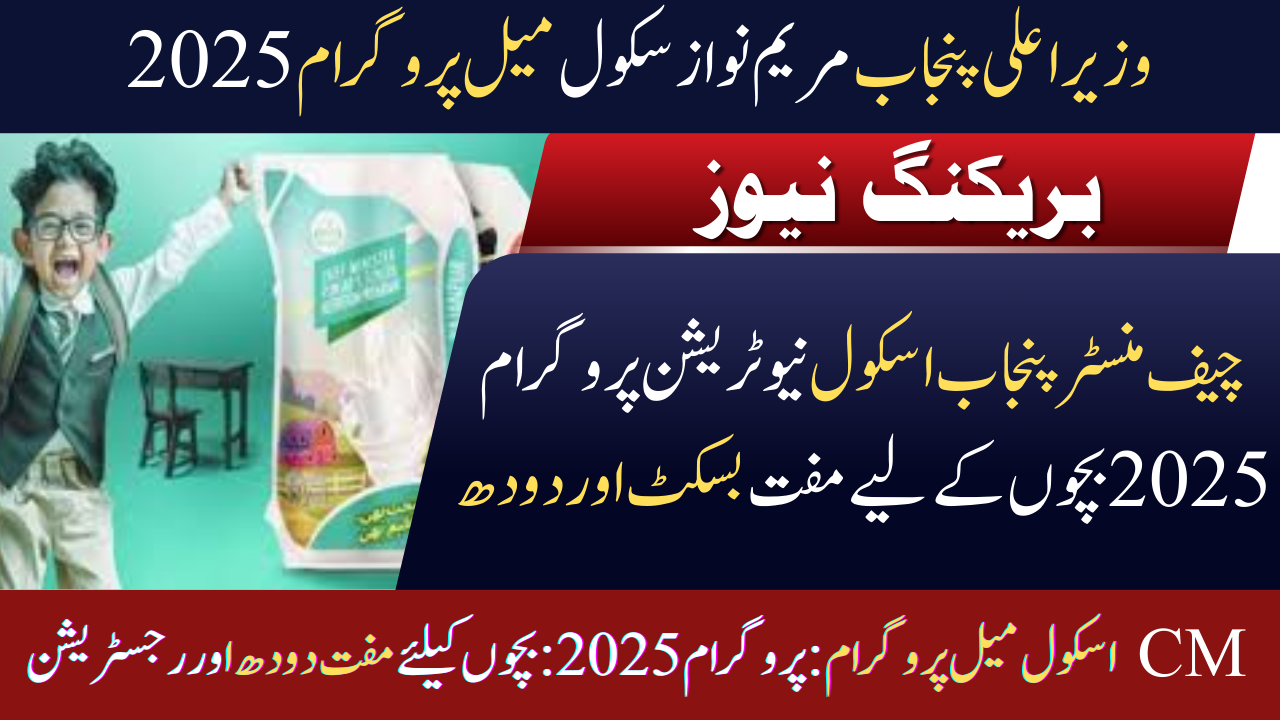
in 2025, Punjab took a big step toward tackling malnutrition, improving student health, and boosting school attendance by rolling out the CM Punjab School Meal Program. The core of the initiative is simple, but its impact could be profound: provide a free daily milk pack for primary school children in needy districts, supported by environmental and governance measures to make it sustainable.
What Is the Program?
- It’s known also as the School Nutrition Program. Its main feature is distributing a milk packet (approx. 175 ml) each school day to children in government primary schools.
- The program begins in three districts of South Punjab: Rajanpur, Muzaffargarh, and Dera Ghazi Khan.
- Phase one includes about 400,000 children in 3,500+ government primary schools in those districts.
Why Free Milk?
- Young children often suffer from nutritional deficiencies (protein, calcium, vitamins). Free milk helps address these.
- When children are healthier and well‑nourished, their ability to focus improves, reducing fatigue during school hours and improving learning outcomes.
- It encourages better school attendance, especially in poorer or remote areas where food insecurity can be a barrier.
Environmental & Sustainability Features
- They collect empty milk packs and send them for recycling.
- Under what’s called the Green Punjab Policy, there’s a target to recycle millions of milk packs monthly (some reports say about 1.3 crore milk pack cartons) as the program scales.
How Registration & Participation Work
One thing to note: there isn’t a separate online registration process for most parents. The program is school‑based, meaning eligible children in government primary schools in the pilot districts automatically benefit. Here’s how it works:
- If your child is enrolled in a government primary school in one of the districts selected (Rajanpur, Muzaffargarh, Dera Ghazi Khan), they will receive the milk pack as part of the program.
- The government coordinates with school administrations for distribution. Teachers or school staff handle giving out the milk each school day.
- Empty milk packs are collected at the school and then processed for recycling. In some cases, proceeds or benefits from waste management may feed back into school improvements. l
Impact and Early Results
- Enrollment has increased: in the pilot districts, more children are attending school when they know there will be milk provided.
- Large numbers of milk packs distributed in first few months. Tens of millions of milk packs have already been given.
- Government claims savings and transparency through competitive tendering for milk supply, monitoring distribution to ensure the packs reach students.
Challenges & Things to Watch Out For
- Ensuring quality of milk (freshness, safety, storage) especially in hotter climates.
- Logistics: delivering many milk packs daily to remote schools without spoilage.
- Maintaining hygiene and facility support in schools (e.g. clean water, clean hands) so milk doesn’t lead to health issues.
- Ensuring consistent supply so there are no gaps, which can disappoint students.
- Proper collection and management of empty packs to ensure the recycling promise works, plus making sure schools get the benefits from those recycling efforts.
- Expanding to more districts while keeping standards high and corruption or leakages low.
What Parents & Communities Should Know
- If your child is in a government primary school in one of the initially covered districts, check with the school whether the program has started there. If yes, they should automatically get the milk pack.
- Parents don’t need to register separately in many cases; the school administration handles the rollout.
- If the school is not distributing yet but is eligible, you can ask or remind the school principal or the district education office.
- Support from parents and local community (ensuring children actually drink the milk, ensuring safe handling) helps effectiveness.
Why This Program Is Important
- Health: fighting undernutrition, improving child growth.
- Education: improving concentration, attendance, reducing drop‑outs.
- Environment: turning waste (empty milk packs) into something useful.
- Social equality: ensuring children from poorer backgrounds get nutrition support.
What’s Next
- Expansion to more districts across Punjab in phases.
- Possibly adding more nutritional items in future (beyond milk) depending on needs and resources.
- Better monitoring and feedback systems so issues can be solved quickly.
- Strengthening the recycling chain so environmental goals are met.
Conclusion
The CM Punjab School Meal Program 2025 is a thoughtful welfare scheme aimed at giving young children a nutritional boost every school day. With free daily milk in government schools in selected districts, it isn’t just about feeding children — it’s about improving their ability to learn, grow, and thrive. If you have a child in one of the covered districts, this is something to watch closely: it could make a real difference in their daily life.